
Bison WP20 2 Petrol-Driven Water Pump
Reliable 2 transfer pump delivering up to 420 l/min and 28 m head.
A tough, easy-to-use petrol pump for site de-watering, irrigation, tank transfer and emergency water movement. Built with a protective carry frame, low-oil shutdown, and a 3.6 L fuel tank for extended run time.
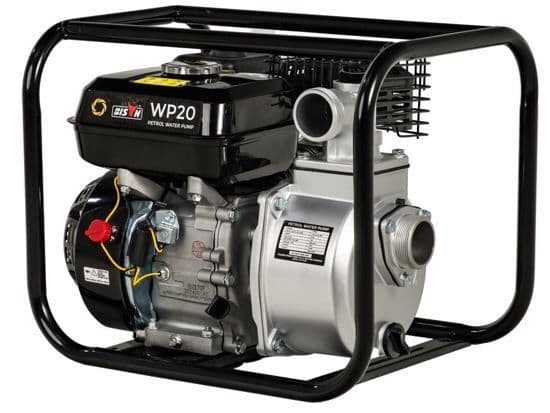
Key Features
-
2 inlet/outlet for fast water transfer
-
High performance: up to 420 l/min flow & 28 m head
-
3.6 L fuel tank fewer refills on the job
-
Low-oil protection safeguards the engine
-
Rugged carry frame portable and durable
-
Quick-start recoil easy to prime and operate
The Bison WP20 is a premium high-quality 4-stroke petrol engine driven pump set built for reliability and longevity.
Typical Applications
-
Construction & civil works site dewatering
-
Irrigation and farm watering
-
Water tank & IBC transfer
-
Emergency water pumping
-
General clean-water use around estates & facilities
Technical Specifications
| Item | Bison WP20 |
|---|---|
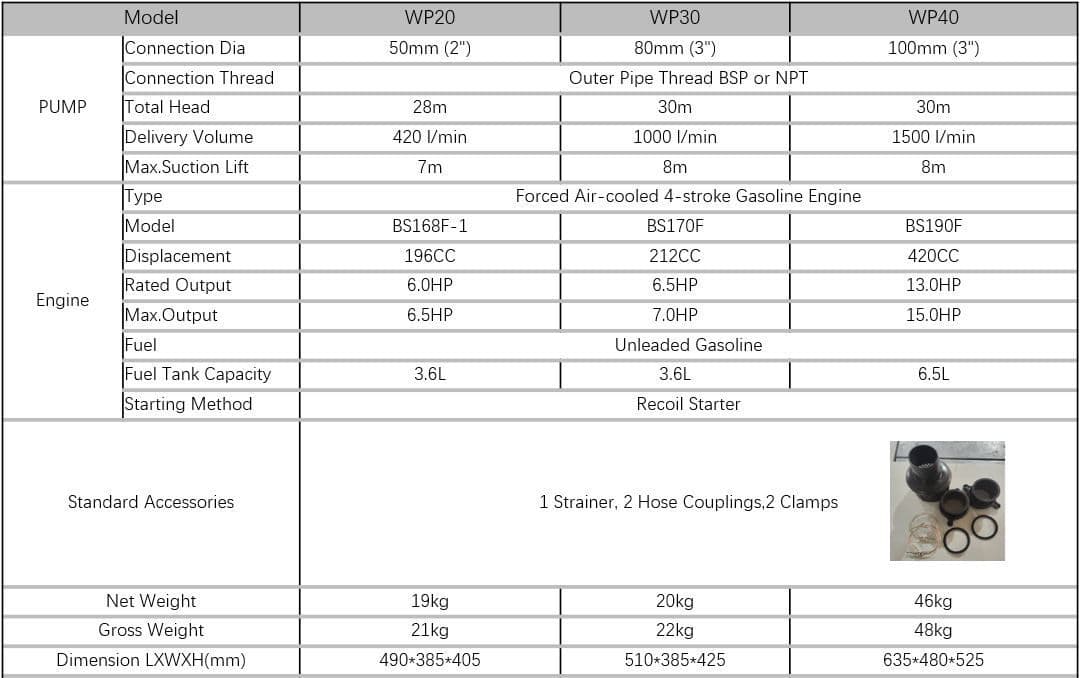
| Inlet/Outlet | 2 (50 mm) |
| Maximum Flow | 420 l/min (25.2 m³/h) |
| Maximum Head | 28 m |
| Fuel Tank | 3.6 L |
| Protection | Low-oil shutdown |
| Starting System | Recoil |
| Weight | 21kg |
Whats Included
-
Bison WP20 pump unit in frame
-
User manual
(hoses, strainers & outlet hose tail fittings incl. engine tool)
Recommended Accessories
-
2 layflat delivery hose
-
2 reinforced suction hose (with foot strainer)
-
2 camlock or BSP fittings
-
Complete hose kits available
Setup & operating tips
-
Prime the pump casing fully before first start.
-
Keep the suction lift as low and straight as possible; avoid air leaks on joints.
-
Fit a foot valve/strainer to protect the pump and maintain prime.
-
Do not run dry use clean water and monitor flow.
-
Check engine oil level; low-oil protection will stop the engine if needed.
Why Choose Henry Pumps
-
Next-day UK delivery available
-
Expert advice from pump specialists
-
Genuine spares & accessories in stock
-
Reliable after-sales support
Customer reviews
-
Brand:Bison
-
Condition:New
-
Product Code:1202-0010
-
Weight:21kg
Suitable for
- Construction site dewatering
- Garden and agricultural irrigation
- Water tank and IBC filling or emptying
- Outdoor emergency rainwater removal
Not suitable for
- Indoor or enclosed-space operation
- Sewage, sludge and fibrous wastewater
- Heavy sand, grit and debris-laden water
- Fuel, solvent and chemical transfer
Frequently Asked Questions
No. The Bison WP20 runs on its own 196cc four-stroke petrol engine, making it suitable for outdoor locations without mains electricity.
It uses a recoil pull starter, so a separate generator or electrical connection is not required. This makes it useful for temporary irrigation, tank transfer and remote site drainage.
The WP20 should be selected primarily for cleanish and slightly dirty-water transfer, including suitable rainwater, tank water and site water without heavy contamination.
It is not a trash pump or sewage pump. Thick mud, concentrated sand, wipes, fibrous material and substantial debris require a different pumping solution.
For floodwater, check what the water contains rather than assuming that every flood-response application is suitable. Keep the suction strainer fitted and clear of debris.
No. Never run the petrol engine indoors or in an enclosed space. Its exhaust contains carbon monoxide, which can cause fatal poisoning. Opening doors or windows does not make indoor operation safe.
For pumping water from a building, the engine-driven pump must remain outdoors, well away from doors, windows and ventilation openings, with the suction hose reaching the water.
Check the suction lift, hose route and water condition before using this arrangement. The pump itself must not be submerged.
The WP20’s published maximum suction lift is 7 metres.
This describes the vertical distance between the source water surface and the pump—not the total suction-hose length or the depth of a well.
Keep the pump as close to the water level as safely practical. Hose resistance, air leaks and operating conditions can reduce the achievable lift.
The 28-metre total-head figure is not a 28-metre suction-lift rating.
Yes. Fill the pump casing completely with water before starting, following the supplied operating instructions.
Ensure the suction connections are airtight and the intake strainer remains submerged. Re-prime the pump after draining it or losing prime.
Do not start with an empty pump casing and expect the engine to draw water without preparation. Running the pump dry can damage its sealing arrangement.
Do not rely on it for that function. Low-oil shutdown protects the engine when its lubricating-oil level becomes too low; it does not monitor the water being pumped.
Keep an adequate water supply at the intake and monitor delivery. Stop the engine if the source becomes depleted or the pump loses prime.
Engine-oil protection is not a substitute for preventing the pump from running dry.
Check the engine-oil level, air filter, hose connections and intake strainer regularly, following the service schedule supplied with the pump.
Keep the strainer clear and flush the pumping section with clean water after use where deposits could accumulate. Inspect the hoses and frame for damage before the next job.
Stop the engine, allow it to cool and follow the manual’s isolation procedure before cleaning or maintenance. Do not carry out servicing while the engine is running.
Buy with confidence
At Henry Pumps, we support residential, commercial, and industrial customers, from homeowners and landlords to contractors and facilities teams. Based in Derbyshire, we help solve flooding, drainage, and water management challenges across the UK. Every pump we supply is chosen for proven reliability and performance, backed by expert, straightforward advice you can trust. Whether you’re maintaining a property, managing a building, or dealing with an urgent issue, we’ll help you find the right solution.