
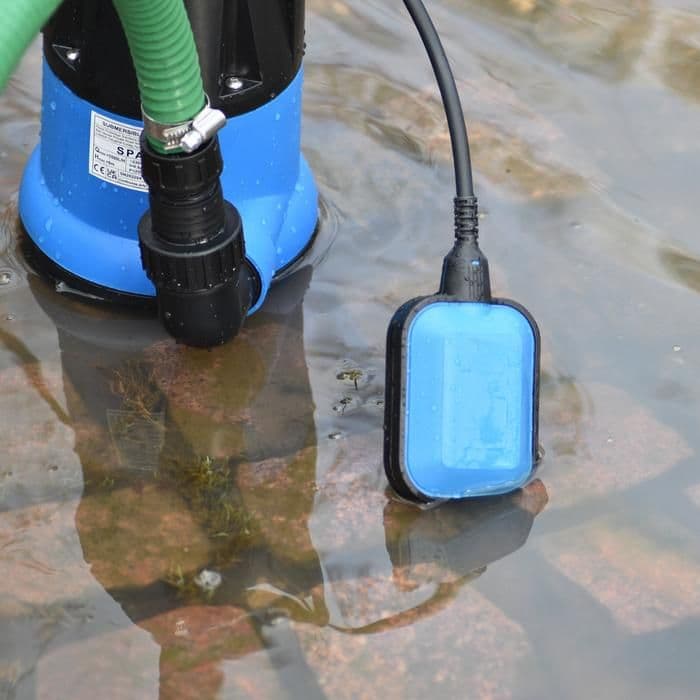
The critical limitation of a manually operated flood pump is that it requires someone to be present, alert, and able to deploy it at the right moment. Flooding does not announce itself conveniently: it arrives at night, during holidays, and in the early hours of a storm when no one is watching.
A flood pump that sits in a cupboard waiting to be found and connected while water rises in a basement or cellar provides far less protection than one that activates automatically the moment water reaches a trigger level. An automatic flood pump system, combining a submersible drainage pump with a float switch, does exactly this: it monitors the water level continuously, starts the pump when water reaches the set point, and stops it when the sump or floor is clear, without any human intervention. This guide explains how these systems work, the components involved, and how to specify the right combination for a given property and flood risk.
How an Automatic Float Switch System Works
A float switch is a simple electrical device that opens or closes a circuit depending on whether it is floating on water or hanging freely in air. The switch is connected to the pump's power supply in series: when the float rises with the water level to a set trigger height, it closes the circuit and starts the pump. As the pump clears the water and the level drops, the float falls and opens the circuit again, stopping the pump. The cycle repeats automatically every time water accumulates to the trigger level.
Most float switches are double acting, with a defined differential between the level at which the pump starts and the level at which it stops. This differential prevents the pump from hunting: if the start and stop levels were identical, the pump would start and stop repeatedly in quick succession as the water surface oscillated around the trigger point. A properly set differential ensures the pump runs for a meaningful period each cycle, clearing a useful volume of water before stopping.
The float switch can be a separate component fitted to the pump cable or pump body, or it can be integral to the pump design with the float mechanism built into the pump housing. Both arrangements are effective; the choice between them depends on the sump geometry and whether a retrofit switch is being added to an existing pump or a new pump and switch are being specified together. Purpose designed flood defence pumps with integral float switches are available as complete ready-to-install units, while separate float switches allow an existing manually operated pump to be converted to automatic operation.
Types of Float Switch
Several float switch formats are available, each suited to different installation conditions:
- Cable float switches: the most widely used format; a weighted float on a cable is suspended at the correct height from the pump or a fixed point in the sump; the length of cable between the fixing point and the float determines the differential between start and stop levels; suited to standard sumps and chambers with sufficient space for the float to swing freely
- Tube or rail float switches: the float travels vertically along a fixed tube or rail rather than swinging on a cable; suited to narrow sumps or confined spaces where a swinging cable float would become caught on the sump walls; the AGMA tube float and similar designs fit directly onto the pump body for a compact, self contained installation
- Double acting switches: designed for both emptying and filling applications; in flood defence use they are wired for emptying, starting the pump when water rises and stopping it when it falls; Tecno and MAC3 double-acting switches are available for both retrofit and new installation across a range of pump types
- Integral pump floats: some submersible drainage pumps incorporate the float switch mechanism within the pump body itself; these are the simplest installation option, requiring only a single power connection with no separate float wiring, and are particularly suited to permanent sump installations where a compact, self-contained unit is preferred
The full range of pump float switches covers cable, tube, and double acting formats from Tecno, MAC3, AGMA, and Microstart, with options for clean water, dirty water, and sewage applications.
Choosing the Right Pump for an Automatic System
The pump specification for an automatic flood defence system follows the same principles as any flood pump selection: it must be rated for dirty water containing the sediment and debris typical of floodwater, it must deliver adequate flow at the actual discharge head of the installation, and its power supply must be reliable during a flood event.
For a permanent basement or cellar sump installation, a submersible drainage pump rated for solids containing water is the correct specification. The pump should be sized to clear the anticipated maximum inflow rate at the sump with a meaningful margin, so it clears water faster than it enters during all but the most extreme events. A pump that can only just keep pace with inflow provides marginal protection and will run continuously during a heavy flood event, which increases wear and the risk of failure at the worst possible moment.
Puddle pump capability is a useful feature for any automatic flood system: a pump that can reduce the water level to within a few millimetres of the sump floor removes far more water per cycle than one that leaves 100mm or more in the bottom of the sump. The submersible drainage pumps range covers options with both standard and puddle pump capability, including models with integral float switches for straightforward automatic operation.
Sump Design and Installation
An automatic flood pump system is most effective when the pump is installed in a dedicated sump: a recessed pit in the floor of the basement or cellar that collects water from the surrounding floor area and concentrates it at a single low point for the pump to clear. A sump of adequate capacity provides a buffer volume that gives the pump time to cycle effectively rather than starting and stopping constantly in response to a very thin layer of water across a large floor area.
The sump should be sized to accommodate the pump body and float switch with enough clearance for the float to operate freely without fouling the sump walls. The discharge pipe from the pump should be routed to a point outside and away from the building where the discharged water cannot re-enter through drainage or ground absorption. A non return valve on the discharge side prevents water flowing back into the sump when the pump stops, which would otherwise trigger repeated short cycling as the backflow returns and re-lifts the float.
Power Supply Resilience
An automatic flood pump system that loses power during the event it is designed to respond to provides no protection. Mains power outages during storms and flood events are common in the UK, and a permanently installed automatic system should either be connected to a dedicated circuit with RCD protection that is unlikely to trip in a flood scenario, or backed up with a battery or generator supply capable of running the pump through a typical flood event duration.
Battery backup units designed specifically for sump pump systems monitor the mains supply and switch seamlessly to battery power if the mains fails, running the pump for several hours on the battery reserve. For properties with a higher flood risk or in areas with unreliable power supplies, a generator compatible installation that allows a portable generator to be connected to the pump circuit provides a practical and cost effective backup solution.
Frequently Asked Questions
Can I add a float switch to an existing manual pump to make it automatic?
Yes; a separate cable or tube float switch can be wired into the power supply of most standard submersible pumps to convert them to automatic operation, provided the pump's electrical connection is compatible with the switch wiring configuration.
What is the differential on a float switch and why does it matter?
The differential is the vertical distance between the water level at which the pump starts and the level at which it stops; a correctly set differential prevents the pump from short cycling by ensuring it runs for a meaningful period each time it starts rather than switching on and off every few seconds.
How do I know if my automatic flood pump is working correctly?
Pour a bucket of water into the sump and confirm the float rises to the trigger level, the pump starts, clears the water, the float drops, and the pump stops; testing the system periodically, particularly before the autumn and winter flood risk season, confirms it is operational before it is needed.
Does an automatic flood pump need a non-return valve?
Yes; a non-return valve on the discharge side of the pump prevents water flowing back into the sump when the pump stops, which would otherwise re-lift the float and cause the pump to cycle repeatedly on the returning backflow.
Final Thoughts
An automatic flood pump system with a correctly specified float switch is one of the most reliable and cost effective flood protection measures available to UK homeowners, particularly for basements, cellars, and lower ground floor properties where water entry is a recurring risk.
The system works without human intervention, responds immediately when water enters, and clears the sump continuously until the flood event passes. Getting the specification right means choosing a pump rated for dirty water at adequate flow, a float switch format suited to the sump geometry, and a power supply arrangement that remains functional during the storm events most likely to cause flooding.
Browse the full range of automatic flood pumps and flood defence equipment at Henry Pumps to find the right pump, float switch, and accessories for your property.