
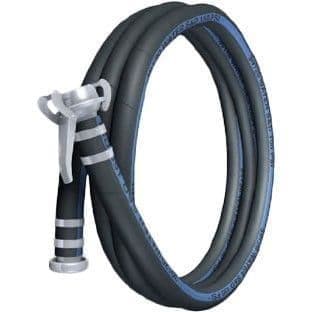
In professional pumping applications, the hose connecting the pump to its discharge or suction point is as important as the pump itself. A hose that is too small restricts flow and creates excessive friction losses. A hose that is difficult to connect or disconnect in field conditions slows deployment and increases operator error. A hose that fails under pressure or collapses under suction brings an entire operation to a halt.
Bauer type hose assemblies address all three of these concerns: they combine heavy duty hose construction with a quick release lever lock coupling system that allows fast, secure, tool free connection and disconnection even under challenging site conditions.
This guide explains what Bauer type assemblies are, the hose types available, and how to choose the right combination for a given application.
What Bauer Type Couplings Are
Bauer type couplings, also known as lever lock couplings, are a cam and lever quick release connection system widely used in agricultural, construction, dewatering, and industrial pumping across Europe. The coupling consists of a male spigot end and a female receiver end with a pair of external lever locks that, when closed, clamp the connection securely and create a watertight seal. Connecting and disconnecting takes seconds without tools and can be carried out with one hand, which is a significant practical advantage when managing hose runs on a busy site.
The Bauer coupling system is fully standardised across manufacturers, which means assemblies and fittings from different suppliers are interchangeable provided they are the same nominal bore size. This interchangeability is important on site where assemblies from different sources may need to be combined to achieve the required hose run length. Pre assembled Bauer type hose assemblies are supplied with lever lock couplings already fitted at both ends, providing an immediately deployable hose run that requires no site fitting or crimping.
Hose Types Available With Bauer Couplings
Three principal hose types are available pre assembled with Bauer lever lock couplings, each suited to different duties:
- Layflat hose: a flexible discharge hose that flattens when empty, allowing it to be rolled compactly for storage and transport. It is the lightest and most easily handled hose type for a given bore size, and the standard choice for pump discharge runs where the hose will be laid on the ground surface. Layflat hose is a pressure hose only: it will collapse under suction and must not be used on the suction side of a pump.
- MDS (medium duty suction) hose: a semi-rigid hose with a reinforced wall that resists collapse under suction conditions. MDS hose is suitable for both suction and discharge duties, making it the more versatile option for applications where the hose may be used on either side of the pump or where suction conditions are moderate.
- Wire armoured suction hose: the heaviest duty option, incorporating a steel wire helix embedded in the hose wall that provides maximum resistance to collapse under high suction conditions. Wire armoured hose is the correct specification for the suction side of high flow pumps, particularly engine driven pumps drawing from open water sources such as rivers, canals, and flooded excavations where the suction head and flow velocity place the greatest demands on the hose structure. Available in 2, 3, 4, 6, and 8 inch bore sizes to match the full range of engine driven pump inlet diameters.
A further option is polypipe with Bauer quick release couplings: rigid polyethylene pipe sections in longer lengths suited to permanent or semi permanent discharge runs where a flexible hose is not required and the straight, self supporting sections are an advantage.
Choosing the Right Bore Size
Bore size selection is the most important specification decision for any hose assembly and must be matched to the pump inlet and outlet diameters. Using a hose smaller than the pump's port diameter creates a restriction that reduces flow and increases the velocity in the hose, leading to higher friction losses and reduced pump performance. Using a hose larger than the pump port requires a reducer fitting at the connection point, which introduces its own friction loss and is best avoided where possible.
For engine driven pumps, the hose bore should match the pump's rated inlet and outlet diameter throughout the full suction and discharge run. Reducing the bore size at any point in the run restricts the full flow the pump is capable of delivering. The available bore sizes, 2 inch, 3 inch, 4 inch, 6 inch, and 8 inch, cover the full range of engine driven pump port sizes used in standard UK construction, agricultural, and emergency pumping applications. The engine driven pumps range covers the principal petrol and diesel pump models that these hose assemblies are designed to complement, with pump port sizes confirmed in each product specification.
Assembly Length and Combining Runs
Bauer type assemblies are available in standard lengths, typically 3 metres, 6 metres, and longer, and can be connected end to end using the lever lock system to achieve the total hose run required. The standardised coupling means assemblies can be added or removed from a run quickly as the deployment situation changes, which is particularly useful in dewatering applications where the pump must be repositioned as the water level drops or the work area moves.
When calculating the number of assemblies needed for a given run, account for the friction losses generated by each coupling connection in addition to the hose length friction. Each coupling introduces a minor restriction to flow, and a long run with multiple connections accumulates these losses. For critical high flow applications, confirming the total head of the hose run including coupling losses against the pump's performance curve ensures the system will deliver the required flow at the operating point.
Suction vs Discharge: Selecting the Right Hose for Each Side
The most common specification error with pump hose is using a discharge only hose type on the suction side of a pump. Layflat hose will collapse immediately under suction as the pump draws water, blocking the flow and potentially damaging the pump if it continues to run with a restricted inlet. The suction side of any pump must use either MDS hose or wire armoured suction hose, selected based on the suction head and flow rate involved. The discharge side can use layflat, MDS, or armoured hose, with layflat being the lightest and most practical option for surface discharge runs in most dewatering and flood response applications. Correctly specifying hose type for each side of the pump before ordering eliminates the most common and disruptive hose assembly error on site. The complete Bauer type lever lock fittings range covers individual male and female couplings, reducers, blanking caps, and conversion fittings to complete and adapt any Bauer system installation.
Frequently Asked Questions
Can Bauer type couplings from different manufacturers be connected together?
Yes; the Bauer type coupling is a standardised system and assemblies from different manufacturers will interconnect correctly provided they are the same nominal bore size, which makes mixing assemblies from different sources on site straightforward.
Can layflat hose be used on the suction side of a pump?
No; layflat hose is a pressure hose only and will collapse under suction; MDS or wire armoured suction hose must be used on the suction side of any pump to maintain the open bore needed for the pump to draw water effectively.
What bore size hose do I need for a 3 inch pump?
A 3 inch pump requires 3 inch bore hose on both the suction and discharge sides to maintain full flow without restriction; reducing to a smaller bore hose at any point will limit the pump's output below its rated performance.
How do Bauer type lever lock couplings seal?
The coupling seals via a rubber gasket seated in the female receiver end; the lever locks clamp the male spigot against the gasket under spring tension to create a watertight seal without any tools or additional fasteners required.
Final Thoughts
Bauer type hose assemblies are the standard for professional pump hose connection in UK construction, agricultural, and emergency response applications, combining robust hose construction with the fastest and most reliable quick release coupling system available for these duties.
Matching the correct hose type to each side of the pump, specifying the right bore size throughout the run, and using suction rated hose where the pump is drawing rather than pushing are the three decisions that determine whether the hose system performs as well as the pump it is connected to.
Browse the full range of pump hose and site dewatering equipment at Henry Pumps to find the right assemblies, fittings, and accessories for your application.