
When floodwater enters a property, the speed of the response determines how much damage is done. Every hour that standing water remains in contact with floors, walls, plasterboard, and timber framing allows moisture to penetrate deeper into the structure, increasing both the extent of the damage and the cost and time required for remediation. A correctly specified flood pump, ready to deploy at the moment it is needed, is the single most effective tool available for limiting that damage. Choosing the right pump before an emergency rather than during it is the critical preparedness decision, and this guide covers the factors that determine which pump is the right one for a given property, risk level, and deployment scenario.
Why Flood Pump Specification Matters
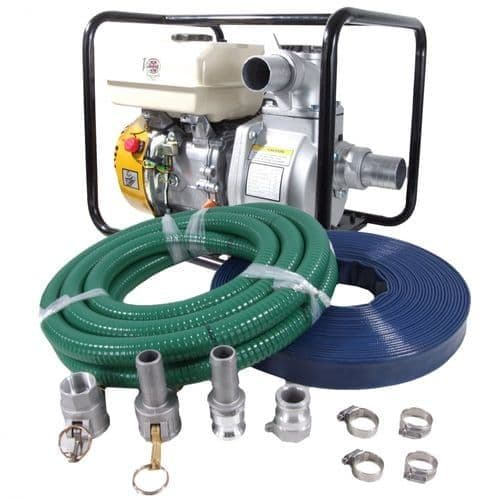
Not all pumps are suitable for flood response, and not all flood pumps are suited to every application. A pump specified for clear water transfer in a garden pond will not perform adequately when asked to handle the silt laden, debris containing water typical of a flood event. A high flow dewatering pump designed for construction site use may be more than is needed for a domestic basement and impossible to deploy quickly in a domestic setting. The right flood pump is the one that matches the specific conditions of the property at risk: the likely water volume, the type of water, the available power supply, and the physical constraints of the deployment location. Ready to deploy flood defence pump kits covering domestic through to high flow site applications provide a matched combination of pump, hose, and accessories assembled for immediate use without site building a system from components.
Understanding the Water You Need to Pump
Floodwater is rarely clean. Surface water flooding carries silt, grit, organic material, and debris from roads, gardens, and drains. River flooding introduces significantly higher sediment loads. Even groundwater flooding, which enters through floors and walls rather than surface inundation, often carries fine particulate material that would damage a clean water pump impeller rapidly.
Flood pumps must be rated to handle solids containing water. A submersible drainage pump rated for water containing particles up to a specified size, typically 10mm to 35mm diameter depending on the pump design, is the appropriate specification for most residential and commercial flood response. Standard clear water pumps, pond pumps, and general transfer pumps are not suitable for flood response duties and should not be used in this application.
Puddle pumps that can reduce water levels to within a few millimetres of the floor are particularly valuable in flood response, as clearing the final shallow layer of water is often the most time consuming stage of the dewatering process. Purpose designed puddle pumps can pump down to 1mm to 3mm, compared to the 100mm or more that a conventional submersible leaves behind.
Flow Rate: Matching the Pump to the Volume
The flow rate of a flood pump determines how quickly it can clear a given volume of water. For a domestic property with a flooded ground floor, calculating the approximate water volume from the floor area and average depth gives the minimum flow rate needed to clear the water within a target time. A room of 30 square metres flooded to 100mm depth contains approximately 3,000 litres. A pump delivering 6,000 litres per hour would clear this volume in around 30 minutes under ideal conditions.
In practice, flow rate is affected by the head height through which water must be discharged: a pump delivering 6,000 litres per hour at zero head may deliver considerably less when pumping water two metres up and over a window sill or wall. Always check the pump's performance at the actual discharge head of the intended deployment, not just the headline zero head flow figure. The submersible drainage pumps range covers models across a wide range of flow rates with published performance curves for accurate specification.
Power Supply: Mains, Petrol, or Battery
Power supply availability during a flood event is one of the most practically important specification considerations and one that is frequently overlooked in pre-flood preparation. Flood events in the UK frequently coincide with power outages: overhead lines are damaged by storms, substations are inundated, and domestic consumer units trip when water reaches electrical installations. A mains powered pump that cannot be connected when floodwater is rising provides no protection.
Three power options are available:
- Mains electric: the most widely available and convenient option for planned installations such as permanent basement sump pumps; suitable for flood response at properties where the power supply is reliably available during flood events and the pump can be safely connected away from the water level
- Petrol engine driven: completely independent of mains supply, making them the appropriate specification for rural properties, sites where power is unreliable, and any deployment where the electrical supply cannot be confirmed safe; petrol flood pumps provide high flow rates suitable for rapid clearance of significant water volumes and should be operated outdoors or in well-ventilated spaces due to exhaust emissions
- Battery powered: increasingly viable as battery technology has improved; battery flood pumps offer mains independence without exhaust emissions, making them suitable for indoor deployment in enclosed spaces; ideal as a standby option for domestic properties where a compact, always-ready pump is needed
Automatic vs Manual Operation
For permanent or semi-permanent flood defence installations such as basement and cellar sump systems, an automatic float switch operated pump that activates when water reaches a preset level provides protection without requiring manual intervention. This is particularly important for unoccupied properties, holiday homes, and any building where the owners may not be present when flooding occurs.
For active flood response where the pump is being deployed and monitored in real time, manual operation is practical and gives the operator more control over the deployment. Purpose designed flood response kits that include the pump, discharge hose with quick release connections, and all necessary ancillaries in a carry case allow rapid deployment with minimal setup time, which is the critical factor when water is rising.
Discharge Hose and Route Planning
A flood pump is only as useful as its ability to discharge water away from the property. Before a flood event is the right time to plan the discharge route: where the hose will run, how it will be routed over or through any obstacles such as window sills, walls, or steps, and where the water will be discharged safely without re-entering the property or flooding a neighbouring one. Lay flat discharge hose is easier to route through restricted spaces than rigid hose and is supplied with most purpose designed flood kits. Confirming that the hose length supplied with the pump is adequate to reach the planned discharge point before the emergency removes a significant practical obstacle at the worst possible moment.
Frequently Asked Questions
What type of pump is best for a flooded basement?
A submersible drainage pump rated for solids containing water, combined with a puddle pump capable of clearing the final shallow layer, is the most effective combination for a flooded basement; an automatic float switch provides protection when the property is unoccupied.
Can I use a garden pump or pond pump for flood response?
No; garden and pond pumps are designed for clean water and will suffer rapid impeller damage if used to pump silt-laden floodwater; a dedicated drainage or submersible dewatering pump rated for dirty water is required for flood response duties.
How much flow rate do I need to clear a flooded room quickly?
A flow rate of 6,000 to 10,000 litres per hour at the actual discharge head of the installation will clear a typical flooded domestic room within 30 to 60 minutes; larger volumes or deeper flooding require correspondingly higher flow rates.
Should I buy a flood pump before I need one?
Yes; purchasing and testing a flood pump before an emergency ensures it is available, configured, and ready to deploy at the moment flooding occurs, rather than being unavailable due to high demand or out of stock at retailers during a flood event.
Final Thoughts
The most important flood pump decision is the one made before floodwater arrives: choosing a pump rated for dirty water, with adequate flow rate at the actual discharge head, and with a power supply that will be available during the event. Getting these three factors right in advance means the pump can do its job effectively when it matters most.
Browse the full range of flood pumps and emergency water removal equipment at Henry Pumps to find the right specification for your property, with expert guidance available to help confirm the correct choice for your specific flood risk.