
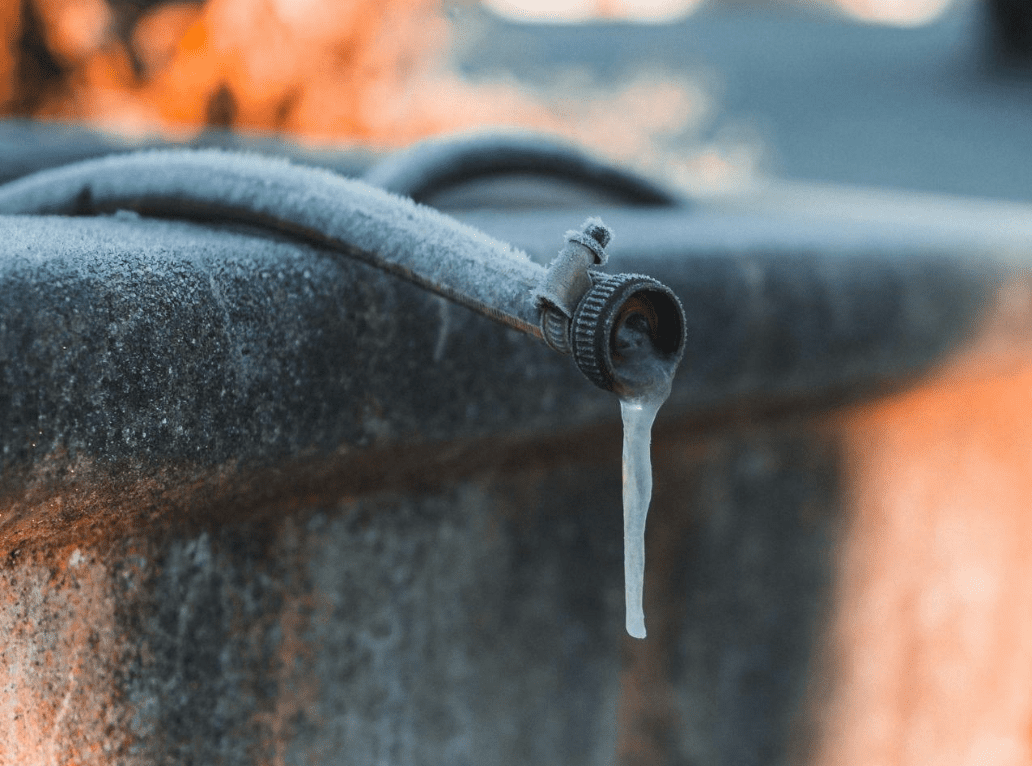
One of the most common avoidable pump failures seen in UK winters follows the same pattern every time. A pump is used during the day on a construction site, farm, or industrial yard and left connected to its hoses at the end of the shift, but nobody drains it. Overnight, temperatures drop below zero and the residual water sitting in the pump end, the hose connections, and the first metre of suction and discharge hose freezes.
Water expands by approximately nine percent as it turns to ice, and that expansion has nowhere to go inside a rigid pump casing, a valve body, or a reinforced hose coupling. By morning the pump end has cracked, a hose fitting has split, or a valve body has fractured. The pump that was working perfectly at 5pm is out of service at 7am, with a repair bill that a three minute end of shift procedure would have prevented entirely.
This guide covers how frost damage happens, which pump types are most vulnerable, and the steps that prevent it.
Why Frost Damage Is So Destructive
Water is unusual among common substances in that it expands rather than contracts when it freezes. The volumetric expansion of approximately nine percent as water becomes ice generates enormous pressure within any closed or partially closed space that contains it. In a pump casing, this pressure acts against the cast iron, aluminium, or polymer walls of the volute and pump end, which are designed to contain water pressure in normal operation but not the hydrostatic pressure of ice expansion from within. The result is cracking at the weakest point, typically around the volute, at threaded connection points, or across impeller housing faces.
In hose assemblies, the expansion acts against the hose wall and the coupling fittings at each end. Layflat hose can accommodate some expansion and may survive mild frost, but the metal Bauer lever lock couplings at each end are rigid and will crack or split at the lever mechanism if the water inside them freezes solid. Wire armoured suction hose has a rigid wall that provides no accommodation for ice expansion and is particularly vulnerable to splitting at or near the coupling swage.
The damage is compounded by the fact that it is not always immediately visible. A hairline crack in a pump volute may not leak noticeably when first started in cold conditions, but will worsen rapidly under operating pressure and can fail catastrophically mid shift, causing water ingress into the motor and total pump loss.
Which Pumps Are Most at Risk
Not all pumps carry the same frost risk. The vulnerability depends on whether the pump is installed in a heated environment, whether it runs continuously or intermittently, and whether residual water is left in the pump end and hoses when the pump is not running.
Surface mounted pumps on construction sites, in agricultural buildings, and on outdoor installations are the highest-risk category in UK winters. They are typically left in situ overnight, often in unheated or partially open structures, with water in the pump end and connected hoses that cannot drain naturally. The surface mounted pumps range covers centrifugal and peripheral pumps in this category, all of which require active frost protection measures when left in below-zero overnight conditions.
Engine driven petrol and diesel pumps used for site dewatering, agricultural pumping, and emergency water transfer are similarly vulnerable. These are frequently deployed outdoors, left connected to suction and discharge hose runs between shifts, and exposed to the full overnight temperature. The pump casing, impeller housing, and particularly the suction inlet and discharge outlet are the most commonly damaged points. The engine driven pumps range includes petrol and diesel models used in these higher risk outdoor applications.
Agricultural washdown pump systems, including permanently plumbed washdown points in livestock buildings and dairy parlours, carry a different but equally significant frost risk. A washdown pump left connected to an outdoor supply line or with water sitting in an unheated pump housing through a cold night is as vulnerable as any site pump. The Henry Pro washdown pump range includes models widely used in agricultural settings where overnight frost protection must be part of the operational routine from October through March.
The End of Shift Procedure That Prevents Frost Damage
The single most effective frost protection measure is draining the pump and hoses completely at the end of every shift when overnight frost is possible. The procedure takes three minutes and costs nothing. The steps are:
- Stop the pump and close any isolating valves on the suction and discharge sides
- Disconnect the suction hose from the pump inlet and allow it to drain fully; hold it vertically if necessary to ensure all residual water runs clear
- Disconnect the discharge hose and drain it in the same way, paying particular attention to any low points or sags in the hose run where water pools rather than draining freely
- Open the pump's drain plug or priming port to drain the volute and impeller housing completely; on pumps without a dedicated drain plug, tilting the pump allows water to drain through the suction inlet
- Remove the Bauer or cam lock couplings from both hose ends and shake out any residual water from the coupling bodies before storage
- Store drained hoses in a coiled position in a location that allows any remaining moisture to run clear rather than pooling in a low section
This procedure is sufficient to prevent frost damage in the vast majority of overnight freezing events. The residual moisture film that remains after draining does not generate sufficient expansion pressure to crack pump casings or hose fittings.
Permanent Installations: Trace Heating and Insulation
For pumps that cannot be drained between uses, whether because they serve a continuously pressurised system or because draining every evening is operationally impractical, two alternative protection methods are available.
Trace heating involves running a low-wattage self-regulating heating cable along the pump body, associated pipework, and vulnerable fittings, wrapped in insulation to retain the heat. The cable maintains the temperature of the water-containing components above freezing without any manual intervention. Trace heating systems are widely used on agricultural borehole installations, dairy washdown supply lines, and outdoor booster pump installations where the pump must remain ready for use throughout the winter.
Insulation alone provides meaningful but time limited protection. A well-insulated pump housing delays the onset of freezing in cold but not extreme conditions, but insulation cannot prevent freezing indefinitely in prolonged hard frosts without a heat source. Combining insulation with trace heating provides the most reliable protection for permanently installed outdoor systems. The broader pump hose and accessories range covers fittings and ancillaries for both temporary and permanent pump installations across all principal application types.
What to Do If a Pump Has Already Frozen
If a pump is found frozen at the start of a shift, the most important rule is not to start it. Attempting to run a pump with ice in the volute or impeller housing causes immediate mechanical damage as the impeller strikes the ice, and if the volute has already cracked the pump will draw air through the fracture rather than water, causing further damage in seconds.
Allow the pump to thaw naturally in a warm environment, or use warm air from a heat gun or fan heater directed at the pump casing from a safe distance. Never use an open flame. Once fully thawed, inspect the pump casing, all connection points, and the hose couplings carefully for cracks or splits before attempting to run the pump. Any cracked component must be replaced before the pump is returned to service.
Frequently Asked Questions
At what temperature does frost damage become a risk for pumps?
Frost damage can occur at any sustained temperature below zero degrees Celsius; the risk increases significantly below minus three or four degrees, and any pump left with water in the casing overnight when temperatures are forecast to drop below zero should be drained as a precaution.
Can layflat hose survive frost overnight?
Layflat hose has some tolerance for mild frost as the flexible wall can accommodate limited expansion, but the metal Bauer couplings at each end are rigid and will crack or split if the water inside them freezes solid; draining hoses and couplings before overnight frost remains the correct procedure regardless of hose type.
Is antifreeze suitable for use in pump systems?
Antifreeze is not appropriate for most pump applications as it contaminates the water being pumped and is harmful to the environment if discharged; draining and insulation are the correct frost protection approaches for the majority of construction, agricultural, and site pumping applications.
How do I know if my pump has cracked from frost damage?
After thawing, inspect the pump casing, volute face, and all threaded connection points for visible cracks or fracture lines; start the pump at low load and check for any water weeping from the casing body, as hairline cracks may not be visible until the pump is under pressure.
Final Thoughts
Frost damage to pumps and hoses is almost entirely preventable with a consistent end of shift draining routine and the right approach to permanent installations in exposed locations. The cost of prevention is minutes of time and a small investment in insulation or trace heating where permanently installed systems are at risk. The cost of not preventing it is a cracked pump casing, split hose fittings, and the downtime and replacement costs that follow.
Browse the full range of surface mounted, engine driven, and washdown pumps at Henry Pumps, with expert advice available on protecting your pump installation through the winter months.