
A pond pump is the heart of any healthy garden pond or water feature. Get it right and your water stays clear, your fish stay healthy, and your fountain or waterfall runs as intended. Get it wrong and you end up with a pump that either cannot keep up with demand or is overspecified for the system.
Choosing the right pump is straightforward once you understand the key measurements involved. This guide covers everything you need to know before buying, from calculating pond volume to matching pump output to your specific application.
Start With Your Pond Volume
Every pump specification starts with the volume of water in your pond. This determines the minimum flow rate the pump needs to deliver to keep the water healthy and well oxygenated. As a general rule, a pond pump should turn over the full volume of the pond at least once every two hours. For ponds containing fish, once per hour is a more appropriate target to maintain adequate oxygen levels and filter performance.
To calculate pond volume in litres, multiply the length by the width by the average depth in metres, then multiply the result by 1,000. For irregular shaped ponds, break the shape into sections and add the volumes together. Once you have the volume, you can immediately identify the minimum litres per hour flow rate the pump needs to deliver. The full range of pond and garden pumps at Henry Pumps includes flow rate data for every model, making it straightforward to cross reference against your calculation.
Understanding Head Height
Flow rate figures quoted for pumps are measured at zero head, meaning no vertical lift and no pipe resistance. In practice, every installation involves some degree of head, and this reduces the pump's effective output. Head height is the vertical distance the pump must push water upward from the outlet to the highest delivery point, whether that is the top of a waterfall, a fountain jet, or a filter box outlet.
For every metre of vertical lift, effective flow rate drops considerably. Manufacturers publish performance curves showing how output changes with head. If your waterfall rises one metre above the pond surface, you need a pump rated well above your minimum flow rate at zero head to still achieve adequate turnover at that delivery height. Always check the pump's rated flow at the actual head height of your installation, not just the peak flow figure.
Matching the Pump to the Application
Not all pond pumps are designed for the same job. The three main applications each have different requirements:
- Filtration pumps need to run continuously at a consistent flow rate. Reliability and energy efficiency are the priorities here.
- Fountain pumps need sufficient head to drive the jet to the desired height. Many include adjustable flow restrictors to tune the display.
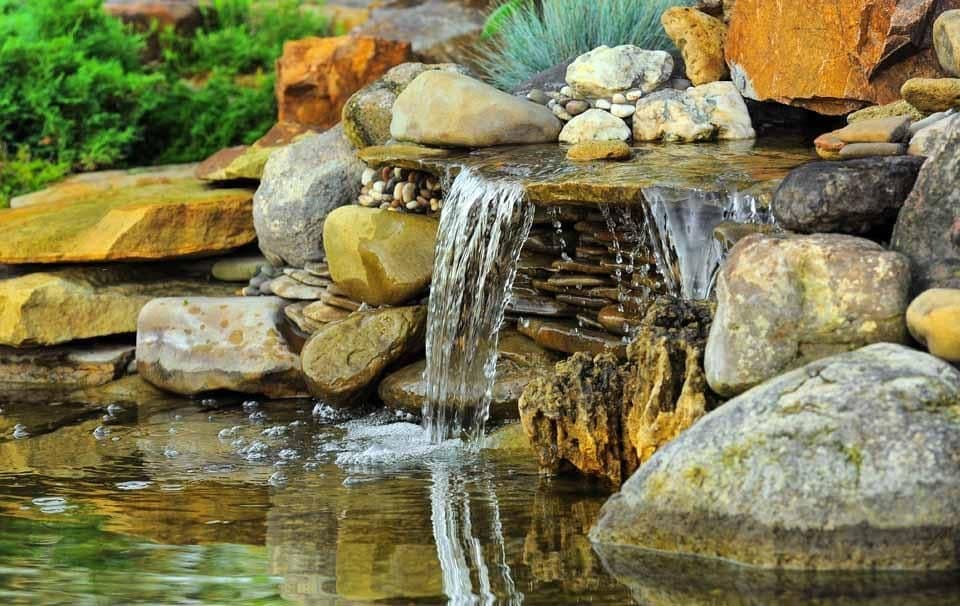
- Waterfall and stream pumps require high flow at significant head. The width of the weir and the height of the fall both affect the pump specification needed to produce a full sheet of water rather than a trickle.
Some water features combine more than one function, in which case the pump must satisfy the most demanding requirement. Splitting flow between a filter and a waterfall from a single pump is possible but requires careful calculation to confirm both outlets receive adequate flow.
Fish Ponds Require Special Consideration
A pond containing fish places higher demands on the pump and filtration system than a purely ornamental feature. Fish produce waste continuously, and without adequate turnover, ammonia and nitrite levels can rise to harmful concentrations rapidly. For fish ponds, the pump should turn over the full pond volume every hour as a minimum, with the flow rate to the filter matching the filter's rated capacity.
Koi in particular produce a high bio load relative to their body size. If you are establishing or upgrading a koi pond, it is worth specifying a more capable pump rather than the minimum. A pump with some headroom costs little more to run but provides meaningful capacity as the fish grow.
Power Consumption and Running Costs
Because filtration pumps run continuously, energy efficiency directly impacts running costs. A pump drawing 100 watts more than necessary costs around £88 more per year at average UK electricity rates. When comparing pumps of similar output, watts per litre per hour is a useful efficiency indicator. More efficient pumps cost more upfront but typically recover the difference within a season.
For water features without fish that do not need continuous operation, a timer controlled pump reduces running costs further. For any pond with fish, however, the pump should never be switched off entirely during warmer months, as oxygen levels can drop to dangerous levels within hours in warm, densely stocked water.
Saltwater and Specialist Applications
Standard freshwater pond pumps are not suited to saltwater or marine water features. Salt water attacks standard pump housings and impellers rapidly, and using the wrong pump in a saltwater application is an expensive mistake that manifests quickly. If you are installing a saltwater pond or marine feature, a pump specifically rated for saltwater exposure is essential. The broader surface mounted pump range covers options suited to more demanding water transfer applications where a standard submersible pond pump is not appropriate.
Frequently Asked Questions
How do I calculate the right flow rate for my pond pump?
Multiply your pond volume in litres by 0.5 for twice hourly turnover, or by 1 for a fish pond, and match this to the pump's rated flow at your installation's actual head height rather than the zero-head peak figure.
Should I leave my pond pump running in winter?
For fish ponds, it is generally recommended to keep a smaller surface pump running through winter to maintain oxygenation and prevent the pond freezing over, rather than running the main filtration pump in very cold conditions.
Can one pump run both a filter and a waterfall?
Yes, but the pump must deliver adequate flow to both outlets simultaneously at their respective head heights, which typically means specifying a considerably more powerful pump than either duty would require independently.
What is the difference between a dirty water pump and a pond pump?
Pond pumps are designed for clean or lightly contaminated water; dirty water and drainage pumps handle debris and solids in suspension and should be used for dewatering or drainage duties rather than ongoing pond filtration.
Final Thoughts
Choosing the right pond pump comes down to four things: knowing your pond volume, understanding the head height your installation requires, matching the pump type to the application, and accounting for running efficiency if the pump will run continuously.
Taking ten minutes to work through these figures before browsing will save you from a pump that underperforms. Browse the full range of garden pond pumps and water feature pumps at Henry Pumps to compare specifications and find the right model for your setup.