
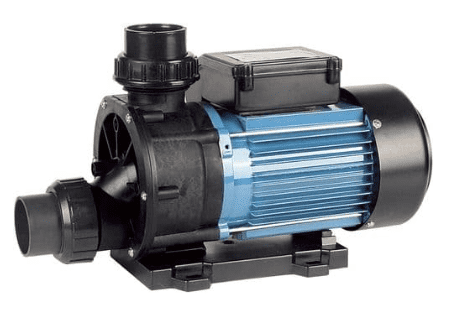
The pump is the engine of any swimming pool filtration system. It circulates water through the filter, heater, and sanitisation equipment, and its performance directly affects water clarity, chemical efficiency, and running cost.
Choosing the wrong pump, whether undersized, oversized, or the wrong type for the installation, creates problems that are often expensive to resolve. This guide covers the key parameters to establish before selecting a swimming pool pump, so you can specify correctly from the outset.
Start With Pool Volume and Turnover Rate
Every swimming pool pump specification starts with the volume of water in the pool. The pump needs to be capable of turning over the entire pool volume within a defined period, typically six to eight hours for a domestic pool during normal operation. This turnover rate ensures that all the water passes through the filter frequently enough to maintain clarity and chemical balance.
To calculate the minimum pump flow rate required, divide the total pool volume in litres by the desired turnover time in hours. The result gives the litres per hour output the pump must deliver at your installation's actual head conditions, not at zero head. The full range of swimming pool pumps at Henry Pumps includes detailed flow rate and head data for every model, making it straightforward to cross reference against your calculated requirement.
Understanding Head Height in Pool Installations
Head is the resistance the pump must overcome to circulate water through the system. In a pool installation this includes the vertical height between the pump and the water level, filter media resistance, pipework length and diameter, and any additional equipment such as a heater or UV sanitiser in the circuit.
Always work from the pump's performance curve at the estimated total head of your installation, not from the peak flow figure. Underestimating system resistance is one of the most common causes of a pool pump that runs continuously but fails to maintain water clarity.
Surface Mounted vs Submersible Pool Pumps
The vast majority of swimming pool pumps are surface mounted, sitting in a plant room or equipment housing rather than being submerged. Surface mounted pool pumps are self priming, drawing water up from the pool through suction pipework, passing it through an integral strainer basket to catch debris, and pushing it through the filter and back to the pool.
The self priming strainer basket is specific to pool pumps and distinguishes them from general water transfer pumps. It catches leaves, hair, and debris before they reach the impeller or filter, protecting both and reducing maintenance. This is why a dedicated pool pump should always be used for pool circulation rather than a general-purpose pump of equivalent flow rate.
Pump Materials: Chlorine and Chemical Resistance
Swimming pool water contains chlorine and other sanitising chemicals that will attack standard pump materials over time. Pool pumps are specifically engineered to handle chlorinated water, with pump bodies typically constructed from tough ABS thermoplastic and impellers from glass reinforced plastic or other chemical resistant materials. Stainless steel shafts provide corrosion resistance at the rotating assembly.
Most quality pool pumps are rated for continuous use in chlorinated water up to a specified temperature, typically between 35 and 40 degrees Celsius. Using a pump not rated for chlorinated water in a pool application will result in premature degradation of seals, impellers, and housing, with predictably short service life. The ESPA swimming pool pump range includes models from the Silen and Wiper series built specifically for continuous chlorinated water service, across a range of flow rates suited to domestic pools and spas.
Sizing for Spa and Hydromassage Applications
Spa pumps operate under different conditions to standard pool circulation pumps. Jets require high pressure at moderate flow rates, and the pump must deliver consistent performance under the back-pressure created by jet nozzles. Standard pool circulation pumps are not designed for this duty and will not perform well or last in a jet application.
If your installation includes a spa or hot tub alongside a main pool, the two circuits should each have their own purpose specified pump rather than attempting to serve both from a single oversized model.
Running Costs and Efficiency
A swimming pool pump typically runs for six to eight hours per day during the pool season, which adds up to a meaningful electricity cost over a summer. Energy efficiency is therefore a practical consideration alongside initial purchase price. Key factors that influence running cost include:
- Motor efficiency rating: IE3 premium efficiency motors cost more upfront but deliver lower running costs over the pump's service life
- Correct sizing: an oversized pump running at full load to supply a smaller system wastes energy; correct sizing avoids unnecessary power consumption
- Variable speed options: some modern pool pumps offer variable speed operation, running at lower speed during off-peak circulation and higher speed for backwashing, which can reduce energy use significantly compared to fixed-speed models
- Timer control: running the pump during off-peak electricity tariff hours where possible reduces operating cost without affecting water quality
Frequently Asked Questions
How many hours a day should a swimming pool pump run?
For most domestic pools, running the pump for six to eight hours per day during the swimming season is sufficient to achieve the recommended turnover rate and maintain water quality, though this varies with pool volume, bather load, and ambient temperature.
Can I use a standard water transfer pump for my swimming pool?
No. Standard water transfer pumps are not designed for continuous chlorinated water service and lack the self-priming strainer basket that protects the filtration system from debris; always use a pump specifically rated and designed for swimming pool use.
How do I know if my pool pump is undersized?
Common signs of an undersized pump include persistently cloudy or green water despite correct chemical dosing, a filter that requires backwashing more frequently than expected, and a pump that runs constantly without achieving the desired water clarity.
What is the difference between a pool pump and a spa pump?
Pool circulation pumps are designed for continuous moderate-pressure operation to turn over pool water through a filter, while spa and hydromassage pumps are built for intermittent high-pressure operation to drive jets and are not interchangeable with standard pool circulation pumps.
Final Thoughts
Getting the pool pump specification right before installation avoids the most common and frustrating problems that pool owners encounter: poor water clarity, high running costs, and premature pump failure. Establish the pool volume, calculate the required turnover flow rate, account for total system head, and confirm the pump is rated for continuous chlorinated water service before comparing products.
Browse the complete range of swimming pool and spa pumps at Henry Pumps to compare specifications across all leading brands and find the right model for your installation.