
The majority of UK flooding events occur between October and March, when prolonged rainfall, saturated ground, and overloaded drainage systems combine to produce conditions that overwhelm properties with no preparation in place. The time to address flood vulnerability is before this window opens, not during it.
A pump ordered during an active flood event may not arrive in time. A sump pump tested in October rather than during a January storm gives you time to rectify any problems before they matter.
This guide works through the practical steps a property owner should take before the autumn and winter flood risk season to ensure the right equipment is in place, in working order, and ready to deploy when it is needed.
Step 1: Assess Your Flood Risk and Understand the Source
Effective flood preparation starts with understanding what type of flooding your property is vulnerable to, as different sources require different responses. The three most common residential flood sources in the UK are surface water flooding from overloaded drains and impermeable surfaces, river and watercourse flooding from nearby bodies of water that overtop their banks, and groundwater flooding where rising water tables push water up through floors and walls from below.
The Environment Agency's flood risk maps for England, and equivalent tools in Scotland, Wales, and Northern Ireland, allow any property owner to check their area's flood risk rating in minutes. Properties in areas with a high or medium surface water or river flood risk, and properties in low-lying areas or on certain rock types with a groundwater flooding history, should treat autumn preparation as an annual routine rather than an occasional exercise.
Step 2: Test Your Sump Pump and Automatic Float Switch
If a sump pump and float switch system is already installed in a basement, cellar, or below ground area, October is the month to confirm it is working. The test is simple: pour several buckets of water into the sump and confirm the float rises to the trigger level, the pump starts, clears the water, the float drops, and the pump stops cleanly. If the pump fails to start, starts but runs without clearing water, or fails to stop, the fault must be identified and resolved before the winter season.
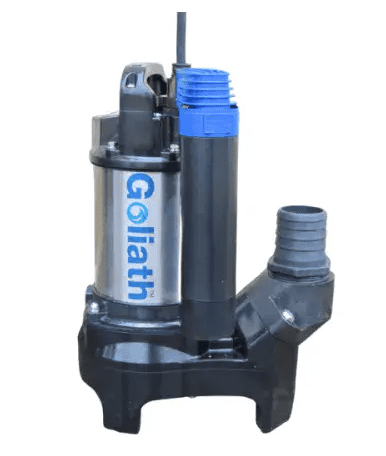
Common causes of sump pump failure discovered during seasonal testing include a seized impeller from lack of use over summer, a float switch that has become tangled or stuck against the sump wall, a failed motor bearing, or a blocked or frozen discharge line from a previous winter. Each of these is manageable when discovered in October; none of them is manageable when discovered at midnight in January with water rising on the floor. The flood defence pumps range covers replacement automatic sump pumps and float switches for immediate despatch if a seasonal test reveals a pump that needs replacing before winter.
Step 3: Check the Discharge Route Is Clear
A pump that is working correctly but discharging into a blocked or partially blocked outlet provides no useful protection. Before winter, confirm the discharge pipe from any sump pump is clear of debris, ice damage from the previous winter, and any obstruction at the outlet point. The non-return valve on the discharge side should be checked for correct operation: a valve that is stuck open allows water to back flow into the sump when the pump stops, re-triggering the float switch and causing the pump to cycle continuously. A stuck closed valve prevents the pump from discharging at all.
The discharge outlet point itself should be confirmed to be directing water away from the property and into a drain, soakaway, or watercourse capable of accepting the flow. Discharge that terminates too close to the building, or into a drain that itself backs up during a flood event, returns water to the source rather than removing it.
Step 4: Confirm Your Emergency Pump Is Deployable
Properties without a permanent sump installation, or those that want a backup to an existing automatic system, should confirm their portable emergency flood pump is in deployable condition before winter. This means:
- The pump starts correctly and delivers expected flow
- The discharge hose is in good condition with no cracks, splits, or damaged coupling connections
- The hose length is adequate to reach the intended discharge point from the expected deployment location
- For petrol powered pumps: fuel is fresh, oil level is correct, and the pump has been run under load within the last three months to confirm the engine starts reliably
- For mains powered pumps: the extension lead and RCD protection are in good condition and of adequate rating for outdoor wet use
- For battery powered pumps: the battery is fully charged and holds a charge adequate for the expected deployment duration
Petrol in particular degrades during storage and can cause carburettor varnishing that prevents a pump starting when it is needed. Draining the fuel system and running the engine dry before a long storage period, or using a fuel stabiliser additive for storage, prevents this. The submersible drainage pumps range covers replacement and backup pump options if a pre-winter check reveals a pump that is no longer fit for purpose.
Step 5: Check External Drainage and Gullies
Blocked surface water drainage is one of the most common and avoidable causes of property flooding. Leaves, debris, and silt accumulating in gullies, downpipes, and surface drains through autumn reduce drainage capacity precisely when rainfall is at its highest. Before the main leaf fall, clear all accessible gullies and surface drains and confirm they discharge freely. Check that downpipes are not blocked and are directing water into the drainage system rather than pooling at the property's base. Any known blockages in the drainage system should be addressed by a drainage contractor before winter rather than during it.
Step 6: Know Your Power Supply Resilience
Storm events that cause flooding frequently also cause power outages. An automatic sump pump or mains powered emergency pump that loses power at the moment flooding begins provides no protection. For properties in areas where storm related power cuts are common, a battery backup unit for the sump pump, or a generator connection point for emergency pump operation, should be considered as part of the winter preparation rather than as an optional extra.
Where a generator is the backup power solution, it should be stored with a known good fuel supply, tested under load before winter, and positioned or stored in a way that allows rapid connection to the pump circuit without requiring work in a flooded or dangerous environment. The broader range of engine driven pumps covers petrol and diesel options suited to emergency backup dewatering duties that are independent of mains power supply.
Step 7: Prepare Your Emergency Response Plan
Equipment in working order is only part of the preparation. Knowing in advance where the pump will be deployed, where the discharge hose will run, where the power supply will come from, and in what order actions will be taken removes the decision making burden from a stressful and time pressured situation. A simple written plan covering these points, kept with the flood equipment, means anyone in the household can initiate the flood response correctly even if the usual person is not available.
The plan should include the trigger conditions for deploying the emergency pump, the discharge route and outlet point, how to safely manage the electrical supply in a wet environment, and who to contact if the situation exceeds the capacity of the available equipment.
Frequently Asked Questions
When is the best time to test a sump pump before winter?
October is ideal: early enough to order and install a replacement before the main flood risk period begins in November and December, and late enough that a pump that has sat unused through summer will reveal any storage related issues during the test.
How do I know if my property is at flood risk?
The Environment Agency's flood risk map for England at check-long-term-flood-risk.service.gov.uk allows any address to be checked for surface water, river, and groundwater flood risk; equivalent tools are available through Natural Resources Wales, SEPA in Scotland, and the Rivers Agency in Northern Ireland.
Can a portable flood pump replace a permanent sump installation?
A portable pump provides emergency response capability but requires someone to be present to deploy it; for properties with recurring basement or cellar flooding, a permanently installed automatic sump pump with a float switch provides continuous protection without requiring any human intervention.
What should I do if my flood pump fails during a flood event?
If a pump fails during an active flood event, prioritise personal safety, move valuables to higher levels if it is safe to do so, contact your insurance provider to notify them, and contact a pump supplier for emergency replacement or hire; do not attempt electrical repairs in a wet or flooded environment.
Final Thoughts
Flood preparation is most effective when it is completed before the risk season begins rather than in response to an imminent event. Testing existing equipment, confirming drainage is clear, checking discharge routes, and knowing that a backup option is available and deployable are the four outcomes that make the difference between a managed flood response and an uncontrolled one.
Browse the full range of flood defence pumps and drainage equipment at Henry Pumps to find the right combination of permanent and portable flood protection for your property.