
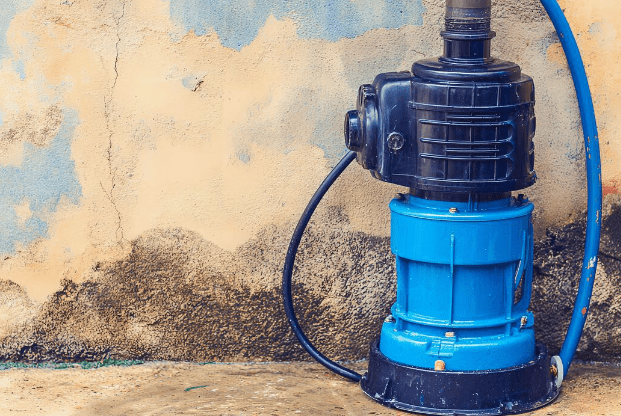
When selecting a pump, flow rate is only half of the equation. The other critical factor is head- the total resistance the pump must overcome to move water from source to discharge.
If head is miscalculated, even a high performance pump can underdeliver or wear prematurely. Understanding static head, dynamic head and Total Dynamic Head (TDH) ensures your system performs as intended.
What Does “Head” Mean in Pumping?
In pump terminology, “head” refers to vertical height rather than pressure. It measures the energy required to lift water and push it through a system.
Instead of PSI or bar, pumps are commonly rated in metres of head. One metre of head equals the energy needed to raise water by one metre vertically.
The higher the head requirement, the harder the pump must work.
What Is Static Head?
Static head is the vertical distance between the water source and the highest discharge point. It represents the effort required to overcome gravity.
Static head does not change with flow rate.
There are two parts:
- Suction static head – The vertical distance between the pump and the water surface when the pump sits above the source. This is often called suction lift.
- Discharge static head – The vertical distance from the pump outlet to the final discharge point.
For example, if water is drawn from a tank 2 metres below the pump and discharged 5 metres above it, the total static head is 7 metres.
Static head forms the baseline requirement for pump selection.
What Is Dynamic Head?
Dynamic head refers to the resistance created when water flows through pipes, hoses and fittings. It is often described as friction loss.
Unlike static head, dynamic head increases as flow rate increases.
Several factors influence dynamic head:
- Pipe or hose length
- Internal diameter
- Number of bends and valves
- Surface roughness of the material
- Flow velocity
Longer pipe runs and smaller diameters significantly increase friction losses. Flexible hoses generally create more resistance than rigid pipe over long distances.
In some systems, especially those involving long discharge hoses, dynamic head can account for a large percentage of total resistance.
What Is Total Dynamic Head (TDH)?
Total Dynamic Head is the combined total of all resistance within the system.
TDH = Static Head + Dynamic Head
TDH is the key figure used when matching a pump to an application. Pump performance curves show how much flow a pump can deliver at specific head heights. If the system’s TDH is higher than expected, flow output will drop.
A Practical Example
Consider a drainage setup with the following:
- Water source 2 metres below the pump
- Discharge point 5 metres above the pump
- 25 metres of hose with several bends
- Estimated friction loss of 4 metres
Calculation:
- Suction static head: 2m
- Discharge static head: 5m
- Dynamic head: 4m
Total Dynamic Head = 11 metres
The selected pump must deliver the required flow rate at 11 metres of head to perform correctly. If the pump is only rated to provide that flow at 8 metres, output will reduce significantly in real world conditions.
Why TDH Is Critical in Flood & Drainage Applications
Flood defence and emergency pumping often involve long hose runs and changes in elevation. Underestimating head in these situations can result in slower water removal and inefficient operation.
If TDH is miscalculated, common issues include:
- Reduced flow performance
- Increased fuel or electricity consumption
- Overheating
- Premature wear
- Pump failure
Correct sizing ensures efficient operation and maximises equipment lifespan.
How to Reduce Head Loss in a System
While static head is fixed by installation layout, dynamic head can often be reduced through better system design.
Increasing pipe diameter lowers water velocity and reduces friction. Keeping discharge runs as short and straight as possible also improves efficiency. Minimising unnecessary bends and fittings further reduces resistance.
Small changes in pipe selection can significantly improve overall system performance.
Frequently Asked Questions
What is the difference between static head and dynamic head?
Static head is the vertical lift required to move water from source to discharge. Dynamic head is the additional resistance caused by friction as water flows through pipes and fittings.
Does static head change with flow rate?
No. Static head is fixed because it is based purely on vertical height. Dynamic head, however, increases as flow rate increases.
What happens if TDH is underestimated?
If Total Dynamic Head is underestimated, the pump may not deliver the expected flow rate. This can lead to inefficiency, overheating and premature wear.
Can I reduce Total Dynamic Head?
You cannot reduce static head unless the installation layout changes. However, dynamic head can be reduced by using larger diameter pipework, shortening runs and minimising bends.
Why do pumps use metres of head instead of PSI?
Metres of head provide a universal way to measure pump performance regardless of fluid density. It simplifies comparison across applications.
Final Thoughts
Understanding static head, dynamic head and Total Dynamic Head is essential when selecting a water pump. Flow rate alone does not determine performance, resistance within the system plays an equally important role.
By calculating TDH accurately and checking pump performance curves properly, you ensure reliable operation, improved efficiency and longer service life.
If you are unsure how to assess head requirements for your application, professional guidance can help ensure the correct equipment is selected from the outset.